
'If we don't become part of this, if we don't embrace this particular technology, millionaire brands might go down, which we cannot allow.'

Concept cars from the 1930s to the 21st century.

The small sports utility vehicle (SUV) segment - comprising models less than 4 metres in length - could witness the "maximum" growth among all categories in the coming months following the recent goods and services tax (GST) rate rationalisation, Tarun Garg, chief operating officer of Hyundai Motor India (HMIL), said.

Two-wheeler sales volume is expected to grow 5-6 per cent this fiscal, while that of passenger vehicles to see a 2-3 per cent rise, following the GST rates rationalisation on automobiles, according to Crisil Ratings. The GST Council's decision to move to a two-rate structure of 5 per cent and 18 per cent, effective September 22, 2025, is a timely move that will revive demand for automobiles, Crisil Ratings said in a statement.

Companies with "gas guzzlers" are trying to set up the wrong narrative against small cars getting relaxation in the proposed corporate average fuel efficiency (CAFE-III) norms on the basis of weight, Maruti Suzuki senior executive officer corporate affairs Rahul Bharti said on Monday, bringing to the fore deep division among carmakers regarding the upcoming rules.

In an event-heavy week ahead, stock markets' movement would highly depend on macroeconomic data announcements, global trends, RBI's interest rate decision and trading activity of foreign investors, analysts said. India's industrial production data for October 2025 will be released on December 1, an official statement said on Friday.
While GST on ICE vehicles was brought down significantly, for electric cars it remained at 5 per cent.
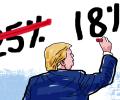
'Trump says India will buy over $500 billion of US goods.' 'At present, India's annual imports of goods and energy from the US are under $50 billion.' 'Reaching $500 billion would likely require more than 20 years, suggesting the figure refers to a long-term aspiration rather than a near-term commitment.'
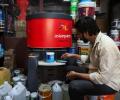
Asian Paints reported a good performance for the second quarter (July-September) of 2025-26 (Q2FY26), with some help from base effects, despite strong competition and extended monsoon. Volume grew in low double digits in the key domestic decorative paints, and value in that segment grew by 6 per cent. Ebitda (earnings before interest, taxes, depreciation, and amortisation) grew 21 per cent year-on-year (Y-o-Y), and PAT (profit after tax) grew 14 per cent. Asian Paints also defended market share better after several quarters where it had lost ground to Birla Opus.

Maruti Suzuki India plans to localise battery production and other critical components over the next few years as part of strengthening the overall EV ecosystem in the country. The company, which plans to launch its first electric vehicle - e VITARA in the domestic market next year, is looking to instill confidence in the buyers as it looks to strengthen the overall EV ecosystem.

Over 50 per cent, or 660 stocks, from the BSE 1000 index recorded negative returns during CY25.
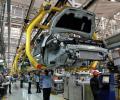
Auto parts exports from India may see a slight slowdown as US President Donald Trump's 25 per cent tariff could increase car prices for buyers by 8-25 per cent, thereby affecting demand, experts believe.
Auto: Retained excise duty at 10% on all automobiles except large cars.

'We serve more than 1.2 billion trips annually and have over 1.5 million active earners each month using the platform.'

Key benchmark indices Sensex and Nifty declined for the third session in a row on Friday, dropping nearly 1 per cent, dragged by heavy selling in IT, auto and energy stocks. Tariff-related uncertainties amid mixed global market trends also added to the pressure, analysts said. The 30-share BSE Sensex tanked 689.81 points or 0.83 per cent to settle at 82,500.47.

Among Sensex firms, Bajaj Finance, Bajaj Finserv, Reliance Industries, HDFC Bank, Tech Mahindra and Axis Bank were the major gainers. However, Asian Paints, HCL Tech, Titan and Hindustan Unilever were among the laggards.

For UK automakers, market access to India will be limited by quantity caps and phased tariff cuts, especially on petrol, diesel and electric vehicles.

Move to help India export hi-end vehicles.
According to the figures released by the Society of Indian Automobile Manufacturers, motorcycle sales in the country during the month was up by 7.39 per cent at 5,13,209 units, against 4,77,901 units a year ago. Total two-wheeler sales in May went up by 6.99 per cent at 6,47,358 units, compared to 6,05,014 units in the same month last year.

The Reserve Bank of India (RBI) on Friday delivered a 25 basis point (bps) repo rate cut analysts expected, driven by the strong 8.2 per cent GDP growth in the September quarter. However, analysts do not expect a runaway market rally as the impact of US tariffs continues.
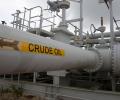
India's exports to the US contracted 8.6 per cent to $6.3 billion in October, while imports rose 13.9 per cent to $4.5 billion leading to a trade surplus of $1.8 billion during the month.

India's luxury auto market is rebounding after a slow start to 2025, with GST 2.0 emerging as the main catalyst.

More than 40 new product launches are expected at the upcoming Auto Expo which will be held under the umbrella of Bharat Mobility Global Expo 2025 from January 17-22, a government official said on Tuesday. With visas continuing to be an issue, large scale participation of Chinese companies are unlikely although some of them are participating at the expo, Joint Secretary at Ministry of Commerce and Industry Vimal Anand said at the sidelines of curtain raiser of 'Bharat Battery Show' which will also be a part of the Bharat Mobility Global Expo 2025.

While Toyota will acquire 4.94 per cent shares of Suzuki, worth $ 908 million, the latter will make a $ 454-million investment in the biggest automaker of Japan. Premium products from the Maruti stable such as the Baleno, Ciaz and Vitara Brezza will be sold under the Toyota brand with small changes.

With demand continuing to be strong post the festive season, leading automakers, Maruti Suzuki, Tata Motors and Mahindra & Mahindra, saw robust growth in sales in November as compared to the same month last year. Maruti Suzuki India reported the best-ever total sales, including exports, last month at 229,021 units, a year-on-year growth of 26 per cent as compared to November last year.

From the Sensex pack, Asian Paints, Tech Mahindra, Tata Consultancy Services, Bajaj Finserv, Adani Ports, HCL Technologies, Bharti Airtel, Infosys, Trent, Reliance Industries, UltraTech Cement, Sun Pharmaceuticals, Eternal, Titan and Bajaj Finance were the gainers. On the other hand, Tata Steel, Tata Motors Passenger Vehicles, Tata Motors Commercial Vehicles, Bharat Electronics, Kotak Mahindra Bank and PowerGrid were the laggards.
The terrorist attack in Mumbai has come as yet another blow to the Indian automobile industry, which is already reeling under a sales slump due to high interest rates and lack of finance availability.
Analysts at stock broking houses Motilal Oswal, Religare Securities, IL&FS Investsmart and Sharekhan say that while Maruti Udyog is doing well, the other biggies Tata Motors and Mahindra & Mahindra would have weak single-digit performances that could lead to a decline in net profit.

Manufacturers of passenger vehicles (PVs) in the first half of the calendar year (2025) reported a modest 0.5 per cent year-on-year increase in wholesale dispatches, while retail sales grew 2.5 per cent for the same period, reflecting a calibrated approach by automakers amid elevated dealership inventories and cautious consumer sentiment. According to the Society of Indian Automobile Manufacturers (Siam), dispatches rose marginally to 2.16 million units, up from 2.15 million units a year earlier.

Electric two-wheeler (e2W) companies are upset with some of their suppliers of heavy rare-earth magnet-powered electric motors, who have objected to their proposal - under consideration by the government - that would allow e2W original equipment manufacturers (OEMs) an exemption from localisation norms on electric motors, thereby enabling them to continue receiving the 5,000-per-vehicle subsidy.V

The previous May peak was observed in 2018 when the domestic PV wholesales stood at 301,238 units.

It is a marketplace of attention, where legacy publishers, global franchises, and consumer brands meet to make the most of India's expanding fandom economy.

Leading automakers Maruti Suzuki, Hyundai, Mahindra, and Tata Motors saw a dip in dispatches to dealers in August amid dip in demand with many prospective buyers postponing their buys anticipating a reduction in vehicle prices on account of the new GST framework. The country's largest carmaker Maruti Suzuki India reported an 8 per cent year-on-year dip in dispatches of passenger vehicles in the domestic market last month.

Passenger vehicles dispatches from factories to company dealerships in the country increased 4 per cent year-on-year to 3,48,847 units in April, industry body SIAM said on Thursday. Passenger vehicle dispatches stood at 335,629 units in April last year.
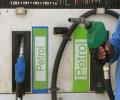
'The E20 usage accrues the huge benefit to the nation, to the society, to the farmer, to the environment, to the exchequer and all of us'
Top carmakers led by Maruti Suzuki, Mahindra & Mahindra, Tata Motors Passenger Vehicles and Kia India on Saturday reported record sales in the domestic market riding on festive demand boosted by GST rate cut. Other manufacturers such as Skoda Auto India and Toyota Kirloskar Motor also posted impressive growth in sales in October.

With nearly 100 launches and unveils, the Bharat Mobility Global Expo 2025, held in Delhi from January 17 to 22, made one thing clear to automobile enthusiasts: Electric vehicles (EVs) are the way ahead for the Indian auto market for years to come.

The Indian automobile retail sector saw a strong start to 2025, with overall sales increasing by 6.6 per cent year-on-year (YoY) in January, according to the latest report by the Federation of Automobile Dealers Associations (FADA). Despite the positive numbers, the association noted that auto dealers have mixed expectations for the coming months. Nearly half (46 per cent) anticipate further growth in sales, while 43 per cent believe sales will remain steady.

'Our vision is to innovate as many products as we can and solve as many problems as possible.'

Festive buying spree unleashed by lower tax rates pushed gross GST collection to about Rs 1.96 lakh crore in October, registering a 4.6 per cent year-on-year growth -- the slowest rate so far this fiscal.
